
Table of Contents
Understanding how tennis is scored is essential for both players and fans. Unlike most sports, tennis uses a unique and hierarchical system of points, games, and sets to determine a match winner. This guide provides a detailed breakdown of every scoring element, from the first point to the final match victory.
1. The Basic Framework: Points, Games, Sets, Matches {#framework}
At its core, the structure of tennis scoring follows a clear, nested progression:
-
Points make up a Game.
-
Games make up a Set.
-
Sets make up a Match.
Winning a match requires winning a majority of the sets (usually 2 out of 3, or 3 out of 5). Learning how tennis is scored means mastering all three levels of this structure.
2. Point Scoring: 15, 30, 40, and Deuce {#point-scoring}
This is the most distinctive part of how tennis scoring works. Points are counted as follows:
-
0 points = “Love”
-
1st point won = “15”
-
2nd point won = “30”
-
3rd point won = “40”
-
4th point won = Game point (wins the game)
If both players reach 40-40, it is called “Deuce.” From deuce, a player must win two consecutive points to win the game. The first point won after deuce gives that player the “Advantage” (or “Ad”). If they win the next point, they win the game. If they lose it, the score returns to deuce. This can continue indefinitely until one player secures the two-point margin.
Why these numbers? The system is believed to have origins in medieval French clock faces, where a quarter turn (15, 30, 45) was used. The 45 was eventually shortened to 40.
3. Game Scoring: How to Win a Game {#game-scoring}
A player wins a game by being the first to win at least four points with a margin of at least two points over their opponent. The server’s score is always called first. For example:
-
If the server wins the first point, the score is “15-Love.”
-
If the receiver then wins two points, the score is “15-30.”
-
Sale!
 Sport
SportThe Essential Tennis T-shirt – Green
$28.00Original price was: $28.00.$23.00Current price is: $23.00. -
Sale!

-
Sale!
 Sport
SportVAMOS NADAL Tennis T-shirt – Unleash The Beast
$28.00Original price was: $28.00.$23.00Current price is: $23.00. -
Sale!
 Sport
SportALL TENNIS GRAND SLAM T-shirt
$28.00Original price was: $28.00.$23.00Current price is: $23.00.
4. Set Scoring: Winning Games to Win a Set {#set-scoring}
A player wins a set by winning at least six games and leading by at least two games. For example, valid set scores are 6-4 or 7-5. If the game score reaches 6-6, a tie-break game is usually played to decide the set (see Section 6).
5. Match Scoring: Winning Sets to Win the Match {#match-scoring}
The final step in how tennis is scored is the match victory. Most professional matches are played as:
-
Best-of-Three Sets: The first player to win 2 sets wins the match. This is standard for all women’s matches and most men’s ATP Tour events.
-
Best-of-Five Sets: The first player to win 3 sets wins the match. This is used in men’s singles at the four Grand Slam tournaments (Australian Open, French Open, Wimbledon, US Open).
6. Special Cases: Tie-Breaks and Grand Slam Rules {#special-cases}
The Tie-Break: At 6-6 in games, a tie-break is played to decide the set (except in some final sets at Grand Slams). In a standard tie-break:
-
Points are scored numerically (1, 2, 3…).
-
The first player to reach 7 points with a 2-point margin wins the tie-break and the set 7-6.
-
Players serve alternately, starting with one serve, then two serves each.
Grand Slam Final Set Rules: To prevent extremely long matches, each Grand Slam has a unique rule for the final set (the 3rd set in women’s/5th set in men’s):
-
Australian Open: At 6-6, a first-to-10-points tie-break is played.
-
French Open: No final-set tie-break; a player must win by a 2-game margin (e.g., 10-8).
-
Wimbledon & US Open: At 6-6, a standard first-to-7-points tie-break is played.
-
Sale!
 Sport
SportAll Four Tennis Grand Slam T-Shirt
$28.00Original price was: $28.00.$23.00Current price is: $23.00. -
Sale!Sport
ALL TENNIS GRAND SLAM T-shirt
$28.00Original price was: $28.00.$23.00Current price is: $23.00. -
Sale!
 Sport
SportAryna Sabalenka Tennis T-shirt
$28.00Original price was: $28.00.$23.00Current price is: $23.00. -
Sale!
 Football
CR7 – Cristiano Ronaldo #7 T-shirt
$28.00Original price was: $28.00.$23.00Current price is: $23.00.
7. Common Scoring Terms Explained {#scoring-terms}
| Term | Meaning |
|---|---|
| Love | Zero points. |
| Deuce | A 40-40 score. A player must win two consecutive points from deuce to win the game. |
| Advantage (Ad) | The point won immediately after deuce. “Ad-In” for server, “Ad-Out” for receiver. |
| Break Point | A point where the receiver can win the game, thus “breaking” the server’s advantage. |
| Set Point | A point where a player can win the set. |
| Match Point | A point where a player can win the entire match. |
8. A Real-World Example {#real-world-example}
Let’s follow a sample match to see how the tennis scoring system works in practice:
-
Game 1: Player A serves and wins points: 15-Love, 30-Love, 40-Love, Game. Player A leads 1-0.
-
Game 2: Player B serves. Points go to Deuce (40-40). Player B gets Ad-In but loses the next point (back to Deuce). Player A gets Ad-Out and wins the next point. Player A wins the game, breaking serve. Leads 2-0.
-
The set continues. The score reaches 6-4 for Player A. Player A wins the first set.
-
The second set reaches 6-6 and goes to a tie-break, which Player B wins 7-5. Sets are tied 1-1.
-
Player A wins the third set 6-3. Player A wins the match 2-1 (6-4, 6-7(5), 6-3).
9. Key Scoring Differences by Format {#key-differences}
Understanding how tennis is scored also means knowing the variations:
-
Doubles: The scoring sequence is identical, with each team having two players. The serving order rotates between teams and partners.
-
College Tennis: Often uses a “No-Ad” scoring system at deuce, where the next point decides the game. Sets are sometimes shortened to first-to-4 games.
-
Fast4: A shortened format where games are first to 4 points (no-ad), sets are first to 4 games with a tie-break at 3-3, and matches are best-of-three sets.
10. Tips for New Players and Fans {#tips}
-
Listen to the Chair Umpire: They announce the score after every point, stating the server’s score first.
-
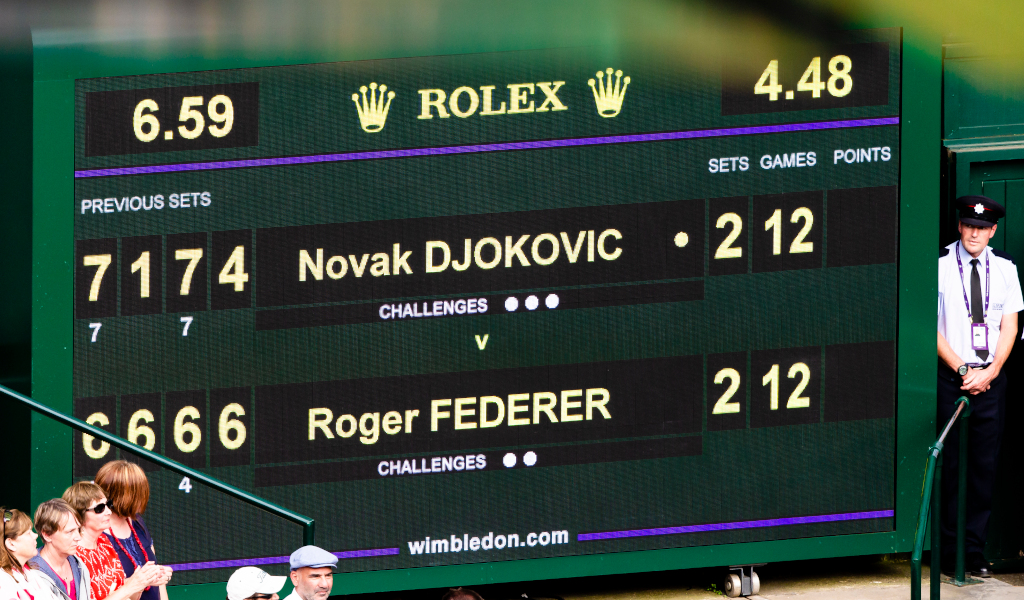
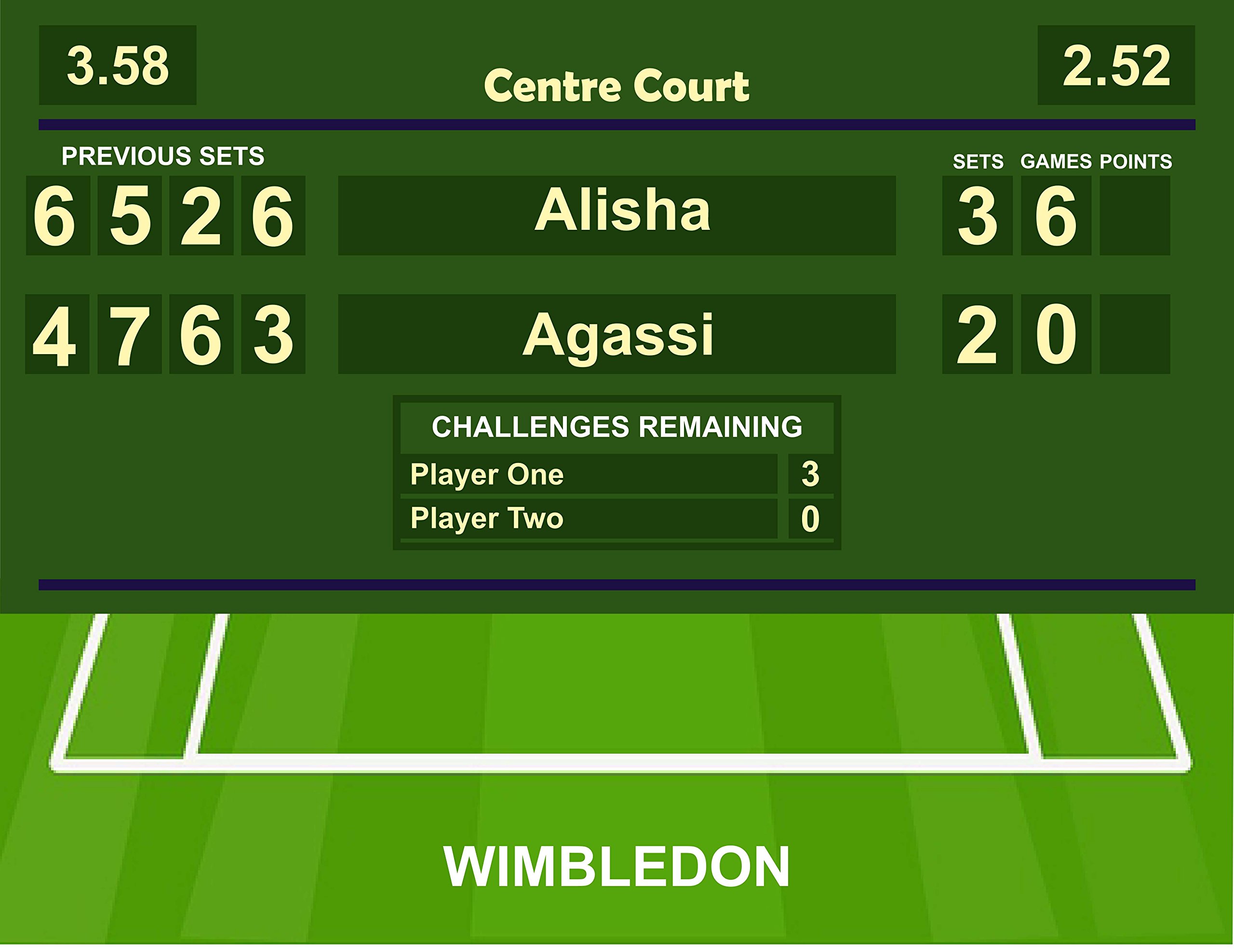
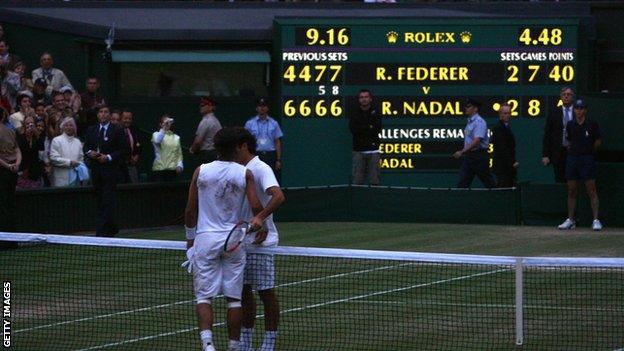
Watch the Scoreboard: Modern tournaments have detailed graphics showing sets, games, points, and even the number of challenges remaining.
-
Keep it Simple When Playing: If the old system confuses you, many recreational players simply count points as “1, 2, 3…” and games as “1, 2, 3…” using standard “win-by-two” rules.
Final Score: While the system of 15, 30, 40, deuce, and advantage may seem complex at first, it creates unique tension and dramatic momentum shifts. Knowing precisely how tennis is scored—from the point level to the match victory—deepens your appreciation for the strategy and psychology that make tennis a captivating sport. Whether you’re calling lines at your local court or watching a Grand Slam final, you can now follow every point with confidence.
Shop with us
-
Sale!Sport
All Four Tennis Grand Slam T-Shirt
$28.00Original price was: $28.00.$23.00Current price is: $23.00. -
Sale!Sport
ALL TENNIS GRAND SLAM T-shirt
$28.00Original price was: $28.00.$23.00Current price is: $23.00. -
Sale!Sport
Aryna Sabalenka Tennis T-shirt
$28.00Original price was: $28.00.$23.00Current price is: $23.00. -
Sale!Football
CR7 – Cristiano Ronaldo #7 T-shirt
$28.00Original price was: $28.00.$23.00Current price is: $23.00.